A lip blush training course is not simply a class on creating a pretty pink lip. It is the beginning of a career built on facial balance, pigment knowledge, clean technique, client trust, and results that look refined long after the appointment ends. For aspiring permanent makeup artists, the right education turns a luxury service into a skill you can confidently offer with care.
Lip blushing is especially rewarding because the transformation can feel beautifully personal. A soft wash of color can improve the appearance of symmetry, restore definition that has faded over time, and help clients feel polished before they reach for a lipstick. But lips are delicate, healing is individual, and every client arrives with a different natural tone, shape, and goal. Quality training should prepare you for all of it.
What Makes Lip Blush Different From a Basic Tattoo
Lip blush is a form of cosmetic tattooing, but successful work is about far more than depositing pigment. The goal is typically a sheer, even enhancement that heals into a natural-looking tint, not a heavy or sharply outlined lipstick effect.
That calls for a controlled hand, thoughtful color selection, and an eye for the client’s existing lip tone. A cool-toned client with darker natural lips may need a different plan than someone with pale, low-pigment lips. A beautiful color in the pigment cup is not always the color that will heal in the skin.
Training should also address realistic expectations. Lip blush can enhance definition and create the appearance of a more balanced lip shape, but it cannot replace filler, erase deep asymmetry, or guarantee that every healed result will look identical. Artists who communicate those boundaries clearly protect their clients and their reputation.
What a Lip Blush Training Course Should Teach
A strong course blends theory with supervised practice. Watching a demonstration may be inspiring, but it is not enough to prepare someone to work on a living client with unique skin, concerns, and healing variables.
Consultation and Client Screening
The consultation is where polished service begins. Students should learn how to discuss desired color, assess natural lip shape and undertone, review medical history, and identify when a procedure should be postponed or declined.
Cold sores are a key example. Lip tattooing can trigger an outbreak in susceptible clients, so artists need clear screening procedures and should know when a client needs to speak with their medical provider about preventative medication. Training should also cover contraindications, consent forms, before-and-after photographs, and the difference between a client who is a suitable candidate today and one who needs to wait.
Color Theory for Real Skin Tones
Pigment theory is one of the most valuable parts of a lip blush education. Students should understand warm, cool, and neutral undertones; how natural melanin affects healed color; and why color correction may be needed before a target shade is achievable.
This is where a course should be inclusive and precise. Artists must be prepared to work thoughtfully with a range of lip tones, including lips with hyperpigmentation or cool, purple-brown undertones. Rushing to apply a fashionable nude or berry shade without a proper plan can lead to a result that heals dull, ashy, or uneven.
Machine Control and Lip Technique
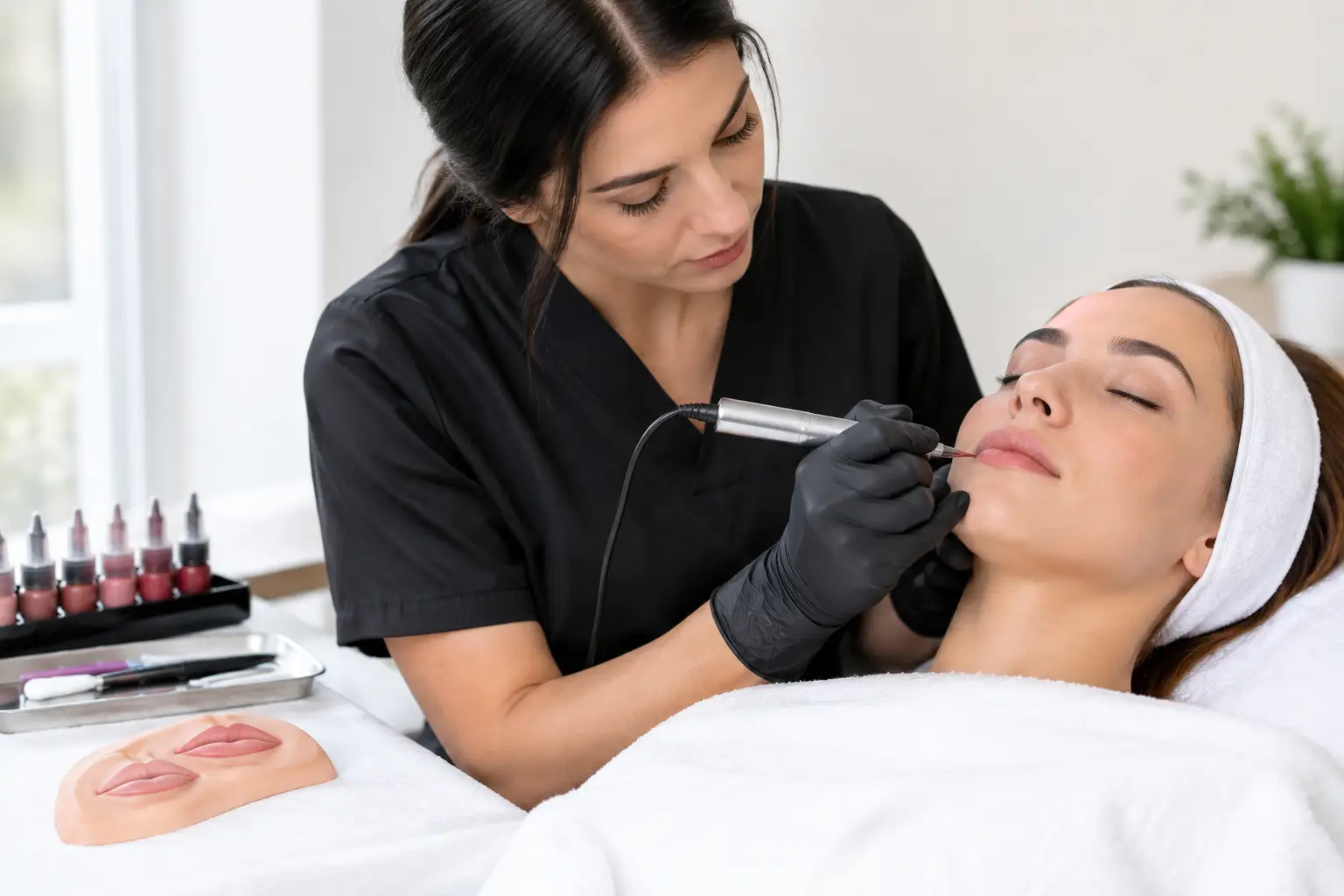
The technical portion should teach more than one pass pattern. Students need to understand needle depth, hand speed, machine voltage, stretching, saturation, and how to avoid overworking delicate tissue. Over-saturation and unnecessary trauma can make healing more difficult and compromise color retention.
Look for instruction on mapping the lip line conservatively, building color gradually, and maintaining a soft transition at the border. A skilled artist knows when to stop. That restraint is part of the luxury result clients notice.
Sanitation, Setup, and Cross-Contamination Prevention
Permanent makeup is a beauty service with serious health and safety responsibilities. Your course should provide detailed education on bloodborne pathogens, personal protective equipment, single-use supplies, workstation setup, barrier methods, disposal practices, and cleaning procedures.
Do not treat this section as paperwork. Clients notice the care behind a clean, organized setup, and proper sanitation supports the professional standards every permanent makeup artist should uphold. Depending on where you plan to work, local and state rules may also govern licensing, facility requirements, and required training. Always verify the current regulations for your city, county, and state before accepting clients.
Healing, Aftercare, and Touch-Ups
A fresh lip blush result is not the final result. Swelling, temporary brightness, flaking, and fading are normal parts of the healing process, and students need to know how to prepare clients without making unrealistic promises.
A course should teach clear aftercare guidance, including how to keep lips clean, what activities to avoid during early healing, why clients should not pick or exfoliate flaking skin, and when to contact their artist or a medical professional. It should also explain touch-up timing and why some clients need more than one session to reach their desired level of color.
Why Hands-On Model Experience Matters
A course with live model work is often more valuable than one that relies only on practice skins. Practice skins help develop hand movement, but they cannot teach you how lips stretch, how a client responds during the service, or how to adapt when natural asymmetry becomes visible in person.
Ideally, students observe an experienced artist, receive step-by-step guidance during their own model appointment, and have time to ask questions afterward. Small class sizes can make a meaningful difference because each student receives more direct feedback on mapping, color choices, pressure, and pacing.
Before enrolling, ask exactly how much supervised hands-on experience is included. Find out whether models are provided, whether supplies are included, and whether the course covers a complete procedure from consultation through aftercare. A lower tuition price may not be the best value if it leaves you buying essential supplies separately or practicing without feedback.
How to Choose Training That Supports Your Career
The best course for you depends on your experience level and professional goals. A licensed beauty professional expanding into permanent makeup may need a different level of support than someone entering the field for the first time.
Look closely at the educator’s own healed work, not only fresh appointment photos. Healed results reveal pigment knowledge, technique, and consistency. You should also feel comfortable asking about credentials, safety protocols, student support, and whether mentorship is available after class.
A thoughtful program may also cover the business side of lip blush: pricing your service, documenting consultations, creating a portfolio, photographing results, handling follow-ups, and setting boundaries around touch-ups. Technical ability gets a client in the chair. Professional communication and dependable systems encourage them to return and refer their friends.
At The Permanent Makeup Studio, luxury beauty is paired with client education because confidence comes from knowing what to expect. That same philosophy should guide your training. Your future clients deserve artistry, but they also deserve an artist who explains the process clearly, respects their comfort, and approaches every appointment with care.
Preparing to Get the Most From Your Course
Come ready to learn, not just to collect a certificate. Review any pre-course materials, practice your mapping exercises, and bring questions about the kinds of clients you hope to serve. If you are transitioning from lashes, brows, or another beauty specialty, consider how lip blush fits into your existing brand and schedule.
It also helps to plan for the practice period after training. Build time for model appointments, take careful photographs, track healed results, and seek feedback before moving quickly into a full client schedule. Your first appointments should be paced with intention. Beautiful permanent makeup is created through repetition, observation, and respect for the healing process.
A well-chosen course gives you the foundation, but your standards shape the artist you become. Choose education that makes you feel prepared to create soft, customized color, answer questions honestly, and give every client a reason to smile when they see their reflection.