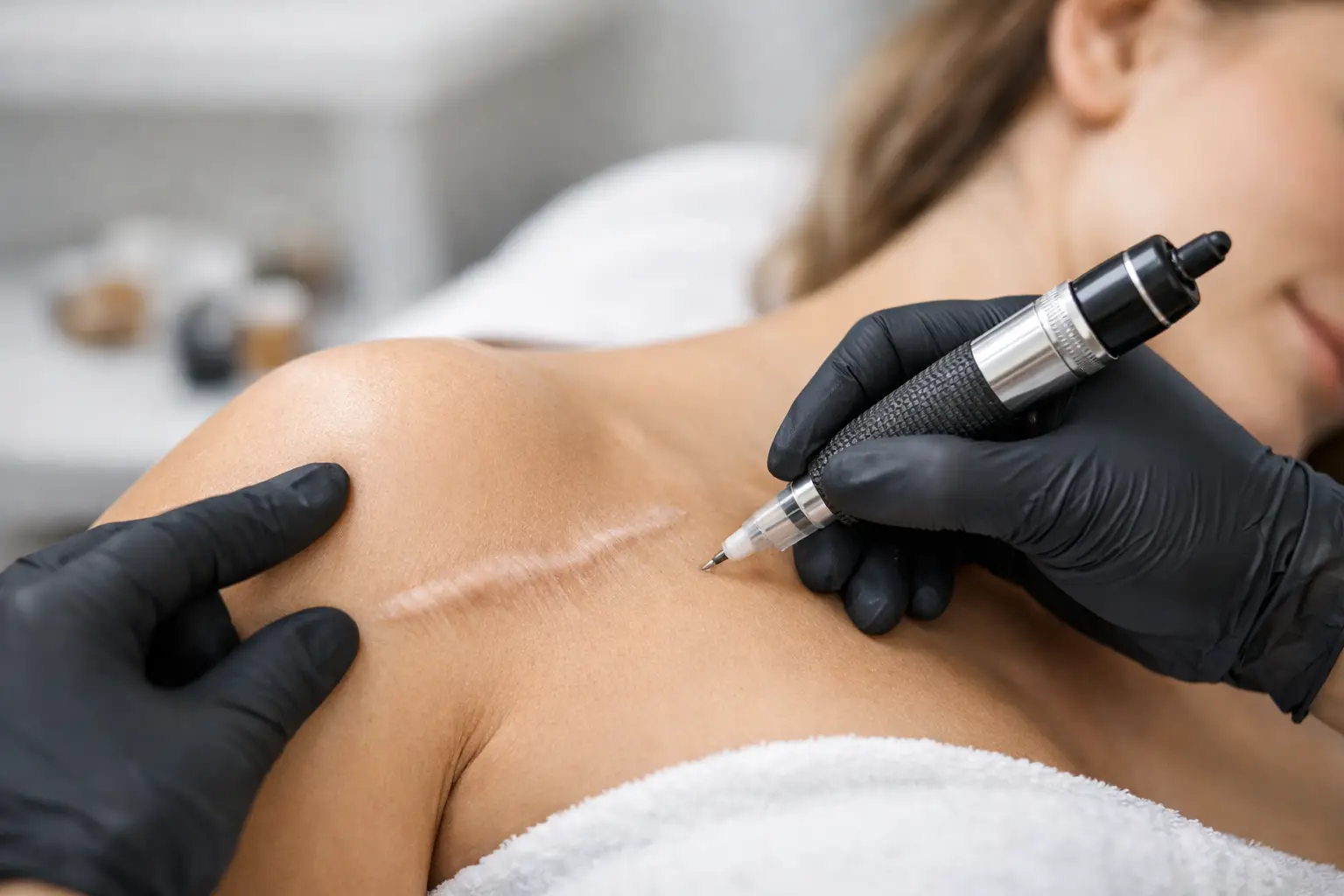
A scar can hold more attention than you want it to – especially when it sits somewhere visible in a swimsuit, sleeveless dress, workout set, or everyday mirror glance. Scar camouflage tattoo treatment is a specialized form of paramedical pigmentation designed to soften the contrast between a healed scar and the surrounding skin. It does not erase a scar or change its texture, but thoughtful color work can make it far less noticeable and help you feel more at ease in your skin.
What scar camouflage tattoo treatment can do
Scar camouflage uses custom-blended pigment to visually match the skin around a scar. An artist implants that pigment carefully into the scar tissue, layering color over one or more sessions to reduce the difference in tone. The goal is refinement, not a one-size-fits-all cover-up. Every scar has its own color, shape, depth, and response to pigment.
This treatment is often considered for scars from surgery, injuries, burns, breast procedures, tummy tucks, C-sections, body contouring, or other fully healed procedures. It may also help some stretch marks when the surrounding skin and tissue are appropriate for treatment. For many clients, the benefit is practical as well as emotional: less time covering an area with makeup, less hesitation at the beach, and more freedom to wear what feels like you.
The realistic expectation matters. Pigment can reduce visual contrast, but it cannot flatten raised tissue, fill an indentation, remove a scar line, or restore skin to its exact pre-scar appearance. A beautifully performed treatment aims for a softer, more blended result that looks natural at a normal conversational distance.
Is your scar ready for camouflage?
Timing is one of the most important parts of a successful result. Scars should be fully healed, stable, and typically at least 12 months old before they are evaluated for camouflage. Some scars need longer, especially after major surgery, a burn, or a procedure with prolonged healing. Fresh scars are still changing in color and structure, which makes pigment selection unpredictable.
A suitable scar is usually flat or mostly flat, no longer red or inflamed, and similar in temperature and sensitivity to the surrounding skin. It should not be actively itchy, painful, open, or changing. Mature scars often appear pale, white, or lighter than nearby skin, though some may retain darker discoloration.
Raised, thick, or keloid scars require extra caution and may not be candidates for tattooing. The same is true for scars with an active skin condition, infection, unexplained irritation, or a history of poor healing. If there is any question about medical readiness, your physician or surgeon should be part of the conversation before booking.
A consultation should be personal, not rushed
A quality consultation is where the artistry begins. Your artist should assess the scar’s age, texture, color, placement, and size, along with your natural skin tone and undertone. They should also ask about your health history, medications, prior tattooing, sun exposure, and any history of hypertrophic or keloid scarring.
This is also the right time to discuss expectations. A pale scar on medium or deep skin, for example, may need a different strategy than a light scar on fair skin. Areas that tan frequently can be more challenging because your natural skin color changes throughout the year. A conservative plan, patch test when appropriate, and planned follow-up session are signs of a careful treatment approach.
Why color matching is the true art
Choosing a pigment that looks close in the bottle is not enough. Skin has warmth, coolness, translucency, and subtle shifts that vary across the body. The artist must account for the scar’s lack of melanin, the surrounding skin’s undertone, and the way pigment may heal after the skin recovers.
Scar tissue can retain pigment differently from healthy skin. One section may hold color beautifully while another needs additional layering. This is why a single session can be enough for a small, responsive area, while larger or more complex scars may need two or more appointments. It is not a flaw in the process – it is the nature of working with altered tissue.
Season also plays a role in color planning. If you are very tan during a Florida summer but much lighter in winter, a match created at your deepest tan may not look as blended year-round. Many clients get the most versatile result by matching their more natural, untanned skin tone. Your artist can help you decide which match best suits your lifestyle.
What happens during the appointment
Your appointment begins with a review of your treatment plan and the area being worked on. The skin is cleansed and prepared, and a custom pigment blend is created. Depending on the scar and your sensitivity, a topical numbing option may be discussed. Most clients describe the sensation as manageable, though scar tissue can feel different from one area to another.
The pigment is placed with controlled, light passes rather than heavy saturation. This protects the integrity of the tissue and allows the artist to watch how the skin responds. The appointment length depends on the size and complexity of the area. A small surgical scar may be relatively quick, while a larger area may require a longer session or a series of appointments.
Immediately afterward, the color may appear stronger or warmer than the final healed result. Mild redness, tenderness, or swelling can occur. That initial appearance is not the finished color. As the skin heals, pigment settles and the area becomes more natural-looking.
Healing and aftercare protect your investment
Aftercare is not an optional extra. The way you care for the area affects comfort, healing, and pigment retention. Your artist will provide instructions tailored to the treatment area and your skin, but the general focus is simple: keep the area clean, avoid friction, and let the skin heal without picking or exfoliating.
For the first stage of healing, you may need to avoid soaking in pools, hot tubs, baths, and the ocean. Skip saunas, intense sweating, and direct sun exposure until you are cleared. Tight clothing, harsh body products, scrubs, retinoids, and self-tanner can also interfere with recovery. If the area flakes or peels, resist the urge to help it along. Let it shed naturally.
Once healed, daily sun protection is especially valuable. UV exposure can change the appearance of both your natural skin and the pigment over time, making a previously close match look less balanced. A high-quality SPF and thoughtful sun habits help preserve your result.
How long does scar camouflage last?
Scar camouflage is often described as long-lasting, but it is not completely maintenance-free. Pigment may soften over time due to sun exposure, skincare products, skin turnover, lifestyle, and the unique behavior of scar tissue. A touch-up can refresh the blend when needed.
How long a result lasts depends on the area treated and how your skin retains pigment. No ethical artist should promise that every scar will hold color identically or that camouflage will be invisible in every lighting situation. The better promise is a personalized treatment plan, honest guidance, and artistry focused on making the scar less of the first thing you see.
When camouflage may not be the first step
If a scar is deeply indented, raised, tight, red, or uneven in texture, you may benefit from a different approach before pigmentation. Medical scar management, microneedling, laser treatments, silicone therapy, steroid injections, or a surgeon’s recommendation may be more appropriate depending on the concern. Camouflage works best when it is chosen for the right reason: correcting color contrast on healthy, stable tissue.
It is also wise to postpone treatment if you are pregnant or nursing, currently healing from surgery, taking medications that affect healing, or experiencing an active skin flare-up. Full disclosure during your consultation helps protect both your safety and your outcome.
A scar is part of your story, but it does not have to define how you feel when you get dressed, step into the sun, or see yourself up close. At The Permanent Makeup Studio, scar camouflage is approached with the same care, customization, and confidence-building artistry as every luxury beauty service – because feeling comfortable in your skin is always worth a thoughtful plan.