
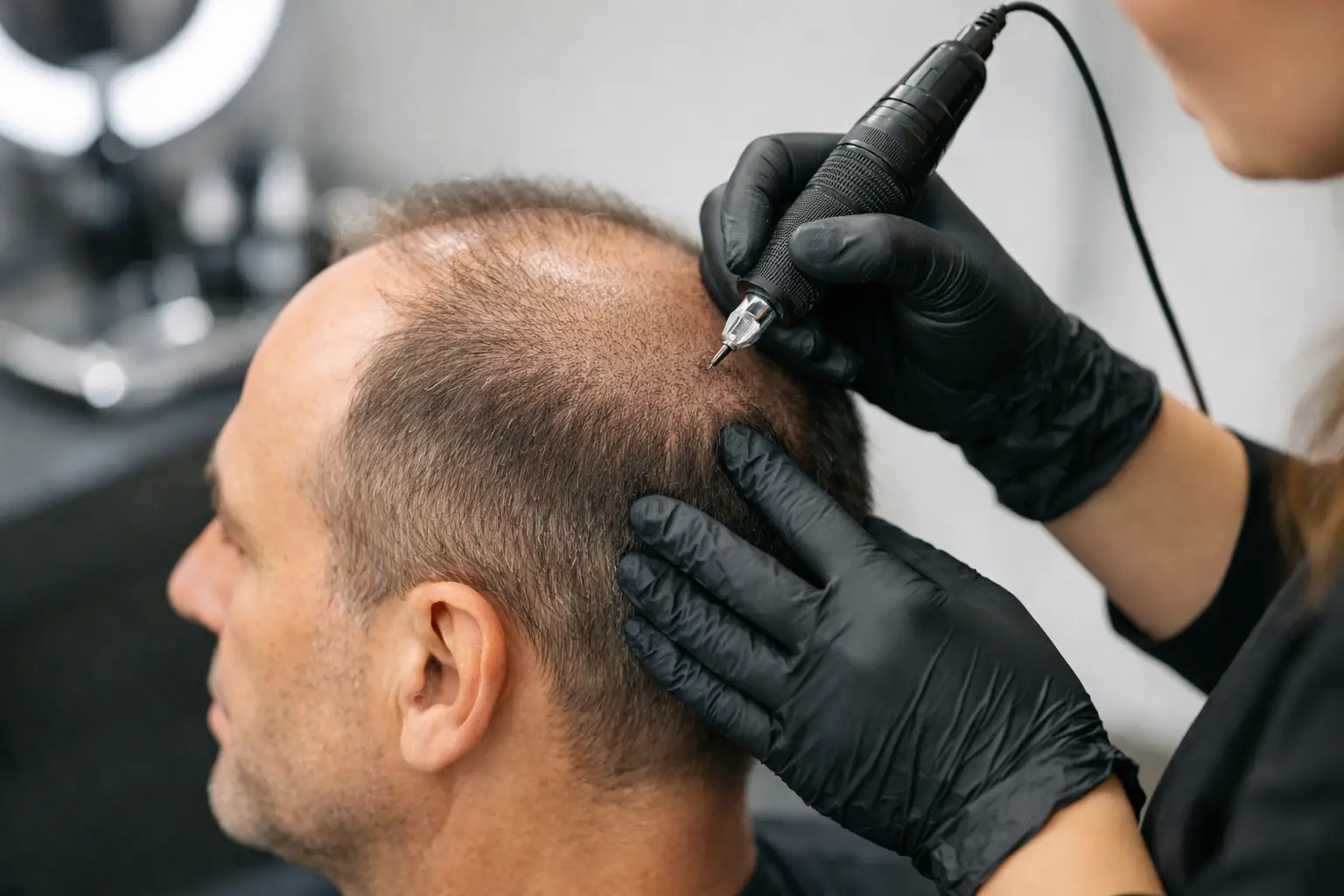
A widening part, a more visible crown, or a hairline that no longer frames your face the way it once did can change how you feel before you have even finished getting ready. When clients search for scalp micropigmentation thinning hair, they are usually looking for more than a cosmetic fix. They want a believable, low-maintenance way to restore the appearance of density and feel comfortable in photos, at the beach, after a workout, and in everyday life.
Scalp micropigmentation, often called SMP, uses carefully placed pigment impressions to replicate the look of natural hair follicles. It does not grow new hair or change the biology of hair loss. What it can do beautifully is reduce the contrast between the scalp and existing hair, creating the visual impression of a fuller, more defined style.
How Scalp Micropigmentation Makes Thinning Hair Look Fuller
With thinning hair, the challenge is often not simply the number of hairs present. It is the scalp showing through. Light reflects off exposed skin differently than it does through a dense head of hair, making areas such as the part line, temples, and crown appear more sparse.
SMP softens that contrast. A trained artist deposits tiny layers of custom-blended pigment into the upper scalp to create a soft shadow beneath your natural hair. On a closely shaved style, it can create the look of a freshly buzzed hairline. On longer hair, it can give the appearance of more density in the areas where the scalp has become visible.
The effect should never look like a flat block of color or a traditional tattoo. Luxury scalp micropigmentation is built gradually, with varied follicle sizes, placement, and tones. This is where artistry matters. Your natural hair color, skin tone, degree of thinning, hairstyle, and future hair-loss pattern should all shape the plan.
Who Is a Good Candidate for Scalp Micropigmentation?
Scalp micropigmentation can be an excellent confidence-building option for both men and women, but the best approach depends on how and where the hair is thinning. Clients with diffuse thinning often love the added density it creates around the part and crown. Those with receding hairlines may choose SMP to bring structure back to the front of the face, especially if they keep their hair short.
It can also complement hair restoration journeys. Some clients use it to camouflage the appearance of transplant scars, while others pair it with their existing hair-growth routine to make their hair look fuller during the process. SMP is a visual enhancement, not a replacement for medical care, so anyone experiencing sudden or unexplained shedding should speak with a qualified healthcare professional first.
The strongest candidates generally have realistic expectations and are willing to follow the healing instructions. If you have active scalp irritation, open skin, a severe skin condition in the treatment area, a history of pigment-related allergies, or are pregnant or nursing, a consultation is the right place to discuss whether treatment should be postponed or avoided.
Longer Hair Versus a Shaved Style
SMP is often associated with the crisp, closely shaved look seen on men with hair loss, but it is not limited to that style. For clients with longer hair, pigment can be placed between existing strands to reduce scalp visibility. This is especially helpful for a broadening part, thinning at the crown, or diffuse loss through the top of the head.
There is a trade-off. The longer the hair, the more the result depends on how you part and style it. If your hair is wet, pulled tightly back, or separated in a new direction, some scalp visibility may still be present. A realistic, thoughtfully designed density treatment enhances your hair rather than promising a completely covered scalp in every circumstance.
What Happens During Your Appointment
A quality SMP experience starts with consultation, not a pigment machine. Your artist should assess your scalp, ask about your hair goals, discuss your normal styling habits, and explain what is realistically achievable. Together, you can decide whether the focus should be hairline restoration, crown density, scar camouflage, or a more complete treatment.
The first session usually establishes a light foundation. The pigment is intentionally subtle at this stage because natural-looking results are created in layers. Later sessions add depth and dimension while allowing the artist to evaluate how your skin retains the pigment.
Most clients need two to four sessions, spaced apart for proper healing. The exact number depends on the treatment area, scalp condition, skin type, desired density, and whether you are blending SMP with existing hair. A conservative first session is a sign of care, not a lack of results. It gives you room to refine the outcome instead of committing to an overly dark or sharp look too quickly.
Discomfort is often described as manageable, though every client has a different sensitivity level. Sessions can vary in length based on coverage. Your artist will also provide clear pre-care and aftercare guidance so you know how to prepare and protect your investment.
Healing and Aftercare Matter in Florida
The days after treatment are part of the service. Fresh pigment needs time to settle, and your scalp needs a chance to heal without unnecessary friction, moisture, or sun exposure. Your provider will give you personal instructions, but clients are commonly asked to avoid washing the scalp, heavy sweating, swimming, steam rooms, and direct sunlight for a short period after each session.
That is particularly worth planning around on the Gulf Coast. Beach days, boat weekends, outdoor workouts, and Florida heat are all part of life in Clearwater and Tampa Bay, but they can complicate early healing. Schedule thoughtfully if you have a vacation, wedding, or major event coming up.
Once healed, daily care is refreshingly simple. Sun protection is still essential because UV exposure can fade pigment over time and can affect the look of your skin overall. A hat and scalp-safe SPF are smart choices when you will be outdoors. Avoid harsh exfoliants directly on the treated area unless your provider advises otherwise.
How Long Does SMP Last?
Scalp micropigmentation is considered long-lasting, but it is not always permanent in the way a traditional body tattoo may be. The pigment softens gradually, and many clients choose a refresh appointment after several years to maintain a polished, natural appearance.
Longevity varies. Sun exposure, skin type, immune response, skincare products, lifestyle, and the depth and color of the initial work can all affect fading. This is another reason a soft, realistic result is preferable to an overly saturated one. As the pigment ages, subtle density tends to remain believable and easier to refresh.
Your natural hair loss may also change with time. A treatment that looks perfect with today’s hair pattern may need adjustment if thinning progresses. A skilled artist considers that possibility from the start, avoiding a hairline or density pattern that could look artificial later.
Choosing an Artist Is Part of the Result
SMP is not a one-size-fits-all beauty service. The difference between a convincing result and an obvious one can come down to pigment selection, dot placement, hairline design, sanitation, and the patience to build density in stages.
Before booking, look for healed results rather than only fresh photos. Ask whether the artist has experience with your hair texture, skin tone, and type of thinning. You should also feel comfortable asking about the number of sessions, pricing, maintenance expectations, pre-care, and healing restrictions. Clear answers are part of a luxury experience.
At The Permanent Makeup Studio, a personalized consultation creates the space to discuss your goals privately, review your options, and design a treatment that feels like you. Whether you want a subtle enhancement beneath longer hair or a more defined short-style transformation, the goal is the same: refined results that support your confidence without adding another complicated step to your routine.
Thinning hair does not have to dictate how visible your scalp feels or how much time you spend trying to disguise it. The most beautiful SMP results are not about looking like someone else. They are about looking in the mirror and seeing a more confident version of yourself, with a plan that fits your lifestyle and your natural features.