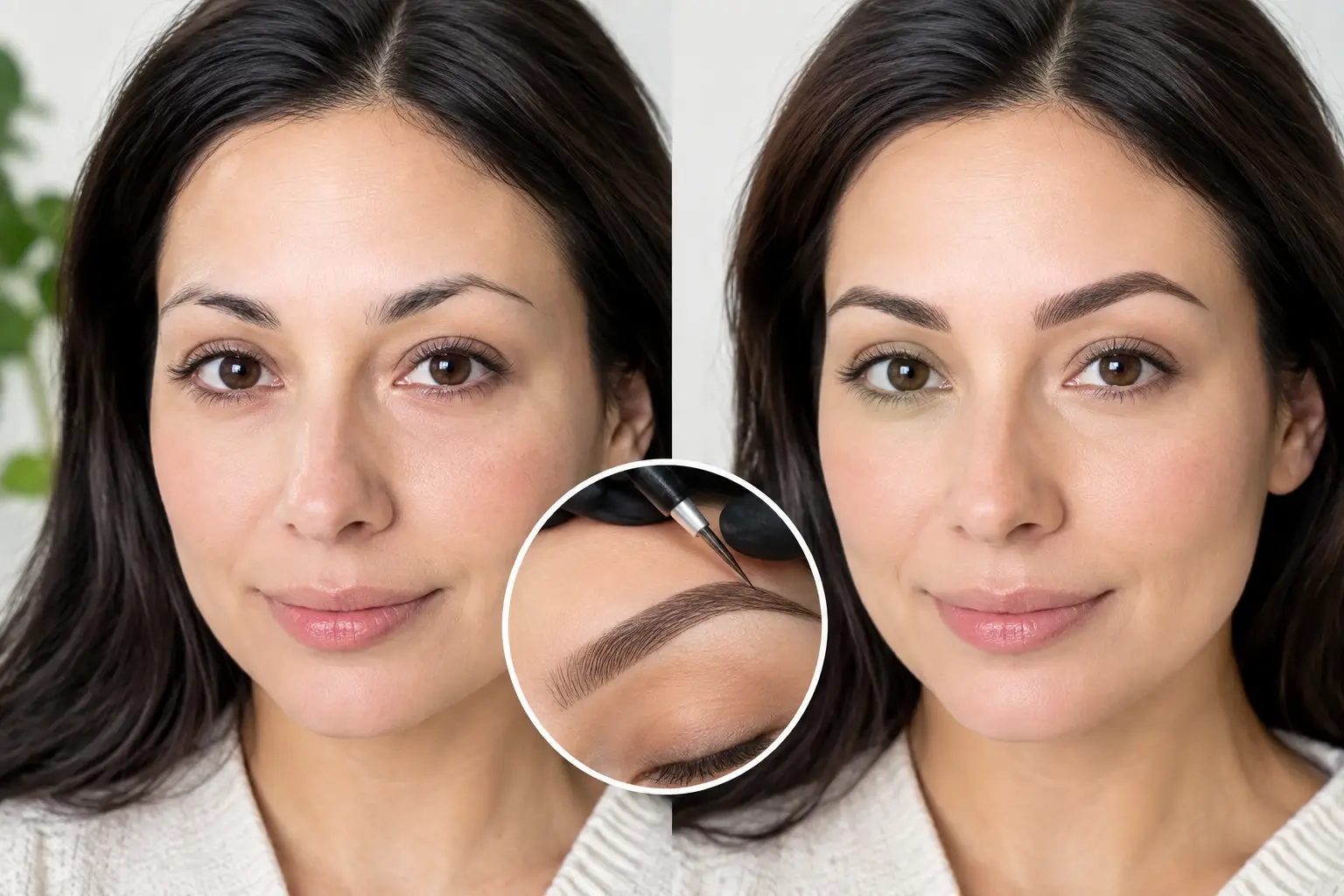
A brow correction is not about making someone else’s brows work on your face. It is about restoring balance, softness, and confidence after pigment has healed into a color, shape, or density you no longer love. These microblading correction examples show why a personalized consultation matters: the best next step may be a targeted color correction, strategic reshaping, saline or laser removal, or simply giving the existing work more time to fade.
Brows frame every expression. When they are too dark, too warm, too cool, uneven, or overly heavy, it can feel like they are the first thing people see. The good news is that many unwanted permanent makeup results can be improved with an experienced artist, realistic expectations, and a plan built around your skin, pigment, and goals.
What a Microblading Correction Can Actually Fix
Microblading correction is a broad term for improving previously tattooed brows. It may involve neutralizing an unwanted tone, adding hair-like strokes where the brow has faded unevenly, adjusting visual symmetry, softening a blocky appearance, or preparing the area for removal and a future brow service.
What it cannot always do is erase old pigment in one appointment. Permanent makeup sits in the skin, and every brow heals differently. Older pigment may have shifted in color over time. Skin type, sun exposure, prior procedures, medication, and the depth of the original work all affect what is possible.
A luxury brow result begins with honesty. If covering old work would make the brows too wide, too dark, or too saturated, a skilled artist may recommend removal first. That recommendation protects your long-term results, even when it means taking a slower path.
Microblading Correction Examples by Common Concern
Example: Brows That Healed Too Warm or Orange
Warm-toned brows are one of the most common correction requests. A brow that originally looked medium brown can fade to orange, red, or peach as certain pigment particles remain in the skin longer than others.
In this case, correction often starts with neutralization. An artist may use a carefully selected cooler modifier to balance the visible warmth before layering an appropriate brow shade. The exact formula depends on how intense the warmth is and your natural hair color, skin tone, and desired finish.
The trade-off is patience. Trying to cover bright warmth with a very dark cool brown can create a muddy result. A softer, staged approach usually looks more refined and allows the brow color to settle beautifully over time.
Example: Gray, Blue, or Ashy Brows
Brows that appear gray or blue often have pigment placed too deeply, an overly cool original color, or a combination of aging pigment and skin undertones. These brows need more than a standard brown touch-up.
A correction appointment may use warmth to counteract the blue-gray cast, followed by a tailored brown shade when appropriate. The goal is not to make the brow look reddish. It is to create a believable neutral brown once the colors heal together.
For very saturated gray brows, especially those with a solid tattooed look, removal may be the more elegant choice. Covering heavily implanted pigment can make the brow look increasingly dense. A consultation helps determine whether correction will enhance the shape or simply add another layer of color.
Example: Uneven Brow Shapes
Natural faces are not perfectly symmetrical, and brows should not look stamped-on or identical. Still, obvious differences in height, arch placement, tail length, or thickness can make the face feel unbalanced.
A correction artist evaluates the brows in motion as well as at rest. One brow may sit higher because of facial muscle movement, not because of poor original work. In that situation, forcing both brows into the same tattooed position can create an unnatural expression.
A thoughtful correction might extend one tail slightly, soften a sharp arch, or add strategic hair strokes to create better visual balance. Small changes can be remarkably effective when they respect your facial anatomy instead of chasing ruler-straight symmetry.
Example: Brows That Are Too Dark or Too Dense
Fresh permanent makeup often appears darker during the first stage of healing. That is normal. Brows can look bold for several days, then lighten as they flake and settle. A true correction should never be rushed while the skin is still healing.
If the brows remain too dark after full healing, the best approach depends on their saturation. Lightly faded brows may benefit from softening around the edges and allowing time between touch-ups. Dense, dark brows often need removal or fading sessions before a new airy, hair-stroke-inspired design is possible.
This is a situation where more pigment is rarely the answer. Beautiful brows have dimension. They should complement your features, even when you are bare-faced at the beach, at the gym, or heading into a busy Tampa Bay workday.
Example: Patchy or Faded Microblading
Patchiness does not always mean the original artist made a mistake. Oily skin, skincare ingredients, sun exposure, immune response, and aftercare can all affect pigment retention. Individual strokes may fade faster than others, leaving gaps or a disconnected shape.
When enough space remains between the old strokes, a correction can refresh the design with new hair-like detail, shading, or a combination technique. If old strokes have blurred together, adding more crisp strokes may not read as natural. A soft powder brow effect can sometimes blend the remaining pigment more gracefully.
This is why one person’s ideal correction may be another person’s fresh start. The technique should be chosen based on what is already in the skin, not just what looked good in a photo.
Example: Brows That Are Too Wide, Long, or Low
Shape corrections are among the most nuanced because tattooed pigment cannot simply be moved. If a brow extends too far at the tail, sits too low, or is wider than your preferred style, adding pigment elsewhere does not solve the problem.
Removal is often recommended for the portion of pigment outside the desired shape. Once the area has faded adequately, the brow can be redesigned with better placement. In select cases, surrounding hairs and subtle shading can improve the overall look while the unwanted portion continues to fade.
The goal is always to protect the skin and preserve options for the future. A beautiful correction is not necessarily the fastest correction.
When to Wait Before Booking a Correction
If your microblading is fresh, wait until it has fully healed before deciding that it needs to be fixed. Initial darkness, redness, flaking, and temporary patchiness are all part of the normal healing process. Most clients need several weeks before the true healed color and shape can be evaluated.
Avoid picking, exfoliating, tanning, or applying unapproved active skincare products to speed up fading. Those choices can damage the skin, cause uneven pigment loss, and make later correction more difficult. Follow your provider’s aftercare instructions, keep the area clean and protected, and allow the skin to recover.
If you have signs of infection, significant swelling, unusual discharge, or a medical concern, contact a qualified healthcare professional promptly. Cosmetic correction comes after your health and skin healing.
What to Bring to a Brow Correction Consultation
A consultation should feel calm, clear, and pressure-free. Bring photos of your brows before the original procedure if you have them, plus photos from the first few days and after healing. Let your artist know when the service was performed, whether you have had previous touch-ups or removal, and what pigments or techniques were used if that information is available.
Be direct about what bothers you most. Is it the color, the shape, the darkness, the lack of hair-like texture, or the way the brows photograph? Also share what you love about your natural brows. That helps create a correction plan that feels like you, only more polished.
At The Permanent Makeup Studio, a personalized consultation can clarify whether your brows are a candidate for correction, fading, or removal before a new design. The most flattering result is never a one-size-fits-all brow. It is a brow that fits your face, lifestyle, and confidence.
Your Best Brow Plan May Be a Fresh Start
The most successful microblading corrections are built on restraint. A talented artist knows when a little color balancing will make a dramatic difference and when the skin needs time before any new pigment is added. That care is what keeps a correction from becoming another layer of work you need to fix later.
If your current brows no longer feel like your style, you do not have to live with them or make a rushed decision. Give your brows the thoughtful, customized plan they deserve, then let your next result bring back the effortless polish you were hoping for.