
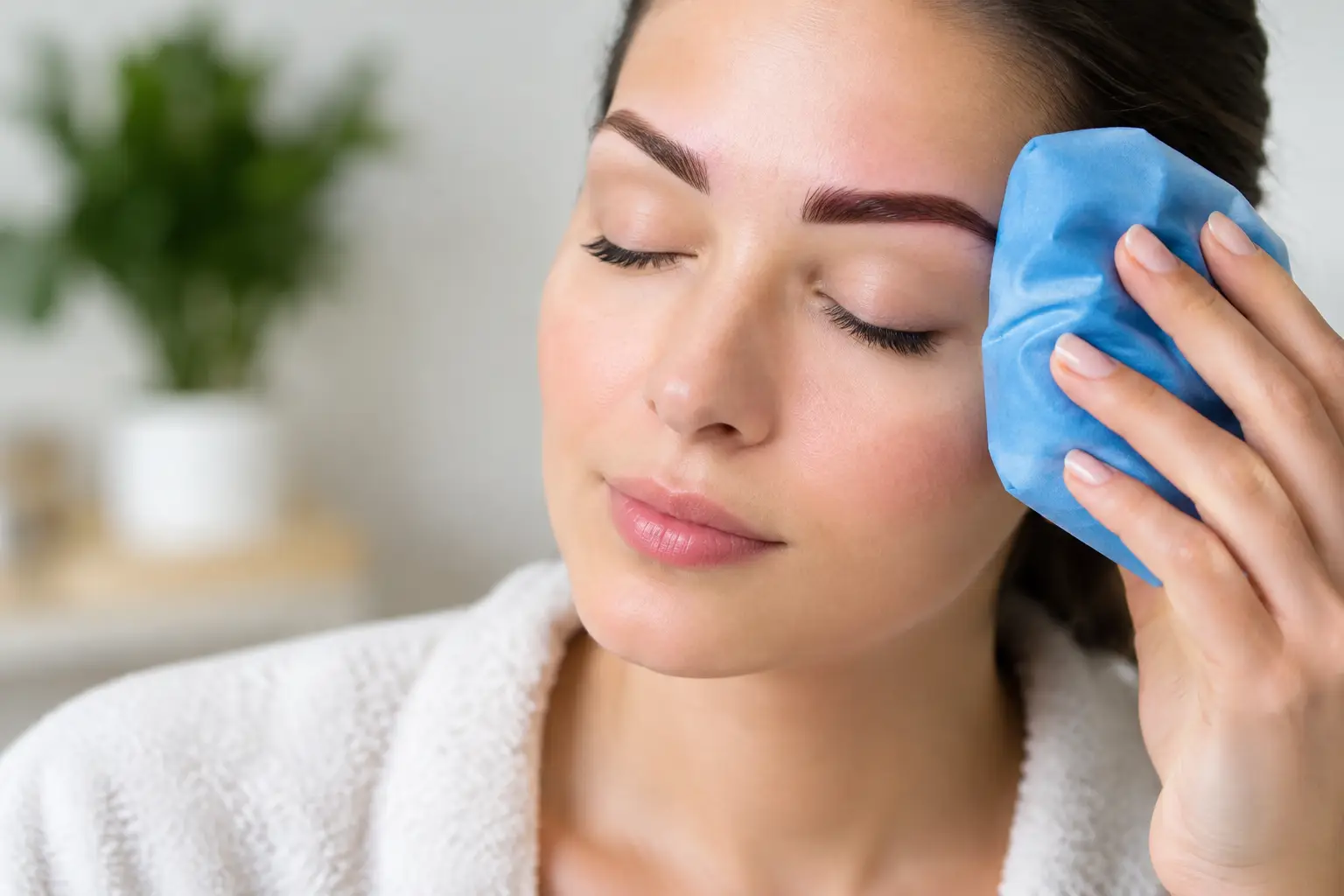
Fresh brows can look more dramatic than you expected on day one. A little puffiness, redness, and tenderness are common after microblading, powder brows, or another permanent eyebrow treatment. Knowing how to manage eyebrow tattoo swelling without disrupting your pigment gives your skin the calm, polished start it needs for beautiful healed results.
Why Eyebrow Tattoo Swelling Happens
Permanent makeup is a controlled cosmetic tattoo procedure. Your artist places pigment into the upper layers of the skin using a specialized tool or machine, and your body responds as it does to any small skin injury: with temporary inflammation. Blood flow increases, fluid may collect in the surrounding tissue, and the brow area can feel warm, tight, or slightly raised.
For most clients, swelling is mild and most noticeable during the first 24 to 48 hours. It often settles quickly, especially when aftercare is followed closely. The brows may also appear darker, warmer, or bolder than their final healed color. That early intensity is part of the healing process, not a sign that your finished brows will look too dark.
How much swelling you experience depends on several personal factors. Sensitive skin, seasonal allergies, lack of sleep, alcohol, salty foods, a long day in the Florida heat, and certain medications can all make puffiness more noticeable. Technique matters too: a soft powder brow may create a different recovery experience than detailed hair strokes. Your artist should always explain what is realistic for your skin and selected brow style.
How to Manage Eyebrow Tattoo Swelling at Home
The goal is simple: keep the area clean, cool, dry as directed, and completely free from unnecessary pressure. Treat your brow appointment as a reason to slow down for a day rather than a reason to test your new look at the gym, beach, or brunch patio.
Use a cool compress carefully
A clean, cool compress can provide relief during the first day. Use a soft, clean cloth lightly cooled with water, then hold it near the brow area for a few minutes at a time. Do not place ice directly on the skin, rub across the brows, or use a dripping-wet cloth. Too much moisture and friction can interfere with the healing skin and pigment retention.
Keep the pressure feather-light. You are calming the surrounding tissue, not pressing down on fresh tattooed skin. If your artist has provided specific aftercare instructions that differ from general advice, follow their instructions first. Your treatment, skin type, and technique should guide your care.
Sleep with your head elevated
The first night can make a visible difference. Sleep on your back when possible, with your head slightly elevated on an extra pillow. This can help minimize morning puffiness and keeps your brows away from pillowcases, hair products, and accidental rubbing.
Fresh eyebrows and a full night of side sleeping do not always make the best pair. If you tend to move in your sleep, use clean pillowcases and keep pets away from your face for the first few nights.
Avoid heat, sweat, and sun exposure
Heat expands blood vessels and can increase redness or swelling. For the first several days, skip hot yoga, intense cardio, steam rooms, saunas, hot tubs, and long hot showers. This matters in Clearwater and across Tampa Bay, where a quick walk outdoors can turn into a sweaty afternoon faster than planned.
Avoid direct sun exposure as well. Freshly treated skin needs protection, but do not apply sunscreen directly on healing brows unless your artist has told you it is appropriate. A hat and shade are the better choice during the early healing period.
Keep products away from the brow area
Your regular skincare routine may be excellent for your complexion but too active for healing brows. Keep cleansers, makeup, exfoliants, retinol, acids, facial oils, and anti-aging serums away from the tattooed area. Avoid brow pencils, gels, concealer, and foundation on or immediately around the brows until your artist clears you to resume them.
Do not add extra ointments because a friend used one after a different procedure. Over-moisturizing can soften healing skin, while unapproved products may cause irritation or affect color retention. Use only the aftercare product and amount your artist recommends.
Resist touching, rubbing, and picking
As swelling fades, light flaking or itching may begin. This is often the moment clients are tempted to inspect every tiny change in the mirror. Leave flakes and scabs alone. Picking can pull out pigment, create uneven patches, and raise the risk of infection or scarring.
If your brows itch, do not scratch them. A brief cool compress near the area may help, and your artist can advise you if the sensation becomes difficult to manage. Healing brows need patience more than they need intervention.
What Is Normal During Eyebrow Tattoo Healing?
Normal healing can look a little unpredictable before it looks refined. During the first few days, mild swelling, redness, tenderness, tightness, and darkened color are expected. Some clients have almost no swelling, while others see light puffiness around the brow bone or upper eyelid. Both can be normal when symptoms are mild and improving.
Between roughly days three and 10, the brows may flake. The color can look lighter, patchier, or even seem to disappear temporarily as new skin forms over the pigment. This is sometimes called the ghosting phase. It can be unsettling, but it does not tell the full story of your healed result.
Color usually returns and settles gradually over the following weeks. A scheduled perfection visit allows your artist to assess retention, balance, shape, and any areas that need more pigment. Permanent makeup is a process, and the healed result is the result that matters.
When Swelling Needs Professional Attention
Mild swelling should trend downward, not become more intense. Contact your permanent makeup artist promptly if you have questions about your healing timeline, unusual sensitivity, or aftercare. A quality artist wants to hear from you early rather than have you guess or apply the wrong product.
Seek medical care urgently if you develop severe or rapidly worsening swelling, spreading redness, increasing pain, heat that intensifies, pus-like drainage, fever, hives, trouble breathing, swelling of the lips or tongue, or vision changes. These symptoms are not typical cosmetic tattoo healing and need medical evaluation. Do not try to cover concerning symptoms with makeup or wait for a touch-up appointment.
It is also wise to speak with your medical provider before your appointment if you have a history of serious allergies, immune concerns, a skin condition affecting the brow area, or take medications that may influence bleeding or healing. Your safety and candidacy always come before a brow appointment.
Prepare for a More Comfortable Brow Appointment
A smoother recovery starts before pigment is placed. Arrive hydrated, well-rested, and ready to follow your pre-care instructions. Avoid alcohol and blood-thinning substances when instructed by your artist or medical provider, and schedule thoughtfully. If you have an important photo event, wedding, vacation, or pool day, give your brows adequate time to heal rather than booking at the last minute.
Tell your artist about allergies, medications, recent cosmetic treatments, and past tattoo or pigment reactions. Clear, honest consultation details allow for a more personalized service and more realistic expectations. At The Permanent Makeup Studio, your brow design and aftercare should feel just as considered as the finished shape.
Your new brows are an investment in effortless polish, so give them the gentle recovery they deserve. Stay cool, keep your hands off, follow your artist’s instructions, and let the healing process reveal the soft, confident definition you came in for.