
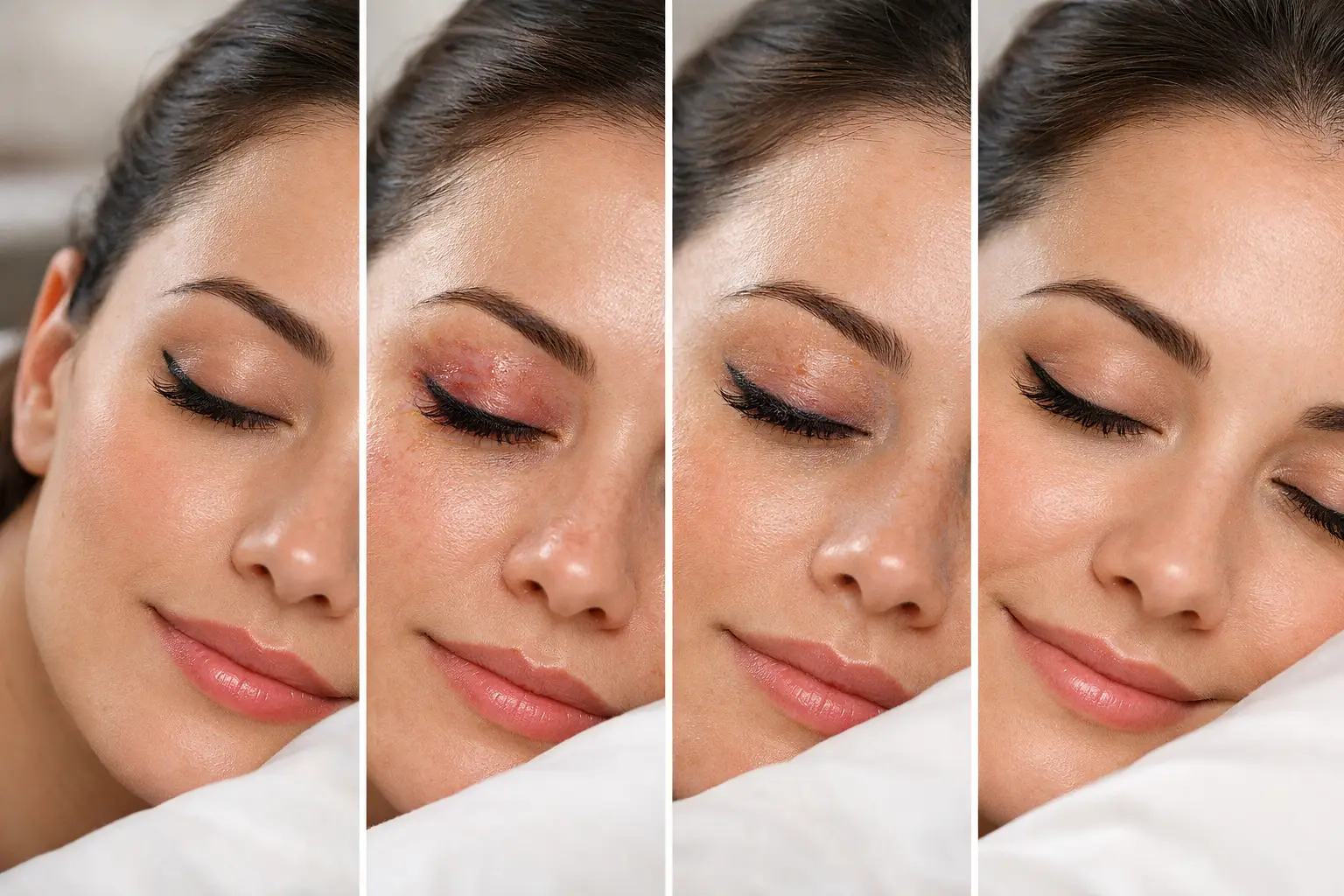
Your permanent eyeliner healing timeline starts the moment you leave your appointment, and the first few days can look more dramatic than the beautifully refined result you selected. Fresh pigment often appears darker, sharper, and more defined than it will once healed. That is expected. A little patience and precise aftercare help protect your investment and allow your eyeliner to settle into the soft, polished enhancement you wanted.
Permanent eyeliner is a form of cosmetic tattooing, although many clients choose a softer, semi-permanent style such as a delicate lash enhancement or a subtle wing. Every skin type, pigment shade, and eyeliner design heals differently. Your artist’s customized instructions should always take priority, especially if you have sensitive eyes, a history of allergies, or a condition that affects healing.
The Permanent Eyeliner Healing Timeline
Day 1: Fresh, defined, and possibly puffy
Immediately after your service, the liner may look bold and more saturated than anticipated. Mild redness, tenderness, watering eyes, and swelling are common, particularly along the upper lash line. Some clients experience only slight puffiness; others notice that their eyes look more swollen the following morning.
Treat this like a quiet recovery day for your eyes. Use a clean, cool compress near the area if your artist approves it, but do not press directly on the eyeliner. Keep your hands away from your eyes, avoid touching the treated skin, and sleep with your head slightly elevated if swelling tends to bother you.
Do not judge the final color today. Fresh eyeliner is not healed eyeliner.
Days 2-3: Swelling eases and darkness remains
For most clients, visible swelling begins to settle within 24 to 72 hours. The pigment can still look very dark, and the line may appear thicker because the surrounding tissue is healing. This stage is temporary, even if you chose a thin lash line enhancement.
Your lashes should stay free of mascara, strip lashes, lash serums, and eye makeup. Contact lenses are typically best avoided for the period recommended by your artist, since inserting and removing them can introduce bacteria or cause accidental rubbing. Glasses are an easy, elegant alternative while your eyes rest.
This is also the point when lifestyle habits matter. Clearwater and Tampa Bay heat may make you want to cool off at the beach or pool, but avoid swimming, hot tubs, saunas, steam rooms, and heavy sweating while your eyeliner is healing. Chlorine, saltwater, heat, and moisture can interfere with the pigment as the skin recovers.
Days 4-7: Flaking begins – let it happen naturally
The liner may begin to feel dry or lightly itchy as it starts to flake. Small, dark particles of pigment can lift away, and the eyeliner may look patchy for a few days. It is tempting to rub at the lash line or remove a flake that seems ready to come off. Please do not. Picking can pull pigment out before it has settled and may create uneven retention.
Keep the area clean exactly as instructed and use only the aftercare product your artist has recommended, if one is included in your plan. More product is not better. Heavy ointments, oils, and unapproved skincare can over-moisturize the area or disrupt the healing process.
Avoid eye creams, retinol, exfoliating acids, facial scrubs, and active skincare near the eyes. When you wash your face, work carefully around the treated area and pat the rest of your skin dry with a clean towel. Do not let shower spray hit your eyes directly.
Days 7-14: The “where did my eyeliner go?” phase
After the flaking period, the color may appear much lighter, cooler, or less even than it did on day one. This is often called the ghosting phase. The new skin over the pigment is still healing, so the liner can look faint or seem to have disappeared in certain areas.
This part of the permanent eyeliner healing timeline can test your patience, especially if you are used to a defined daily eye look. Resist the urge to add pencil liner directly over the healing skin or assume something has gone wrong. Pigment generally becomes more visible again as the skin continues to regenerate.
You may return to your approved makeup routine only when your artist says it is safe. Replace old mascara and eye makeup when possible. Eye products are used close to a healing area, so clean tools and fresh formulas are a smart part of protecting your results.
Weeks 3-4: Color begins to return and settle
By the third or fourth week, the eyeliner usually starts to look more like itself. The color reappears, the edges soften, and the line becomes more natural against your lashes. It may still be lighter than your intended finished shade, which is why a follow-up appointment is often part of a complete permanent makeup plan.
At this stage, look for overall healing rather than perfection. Small areas can retain pigment differently due to skin type, oiliness, immune response, skincare habits, and how closely aftercare restrictions were followed. An experienced artist evaluates the healed result before deciding whether added definition, color, or symmetry refinement is needed.
Weeks 6-8: Ready for your perfection session
Most permanent eyeliner services are assessed for a touch-up around six to eight weeks after the initial appointment. By then, the skin has had time to complete its primary healing process and reveal true pigment retention. Your artist can safely refine any lighter areas, adjust the balance between the eyes, or deepen the color if that suits your original design.
A touch-up is not a sign that the first procedure failed. It is a thoughtful part of cosmetic tattooing. Eyelid skin is delicate, and building color in a controlled way supports a more beautiful, lasting result than trying to make the liner overly dark in one appointment.
What Can Affect Your Healing Time?
Healing is personal. Oily skin may retain pigment differently than dry skin, while mature or sensitive skin can need extra gentleness and time. A dramatic wing, thicker liner, or shaded effect may have a slightly more noticeable recovery period than a fine lash enhancement.
Your routine matters, too. Sun exposure, intense workouts, swimming, rubbing your eyes, sleeping face-down, and using active skincare too soon can all affect healing. Some medications, medical conditions, and immune-related factors may also change how the skin holds pigment. Share your health history honestly during your consultation so your artist can give you appropriate guidance.
If you have lash extensions, plan your appointments carefully. Lash adhesive, removal products, and the need to cleanse around the lashes can complicate aftercare. Many artists recommend scheduling extensions after the eyeliner is sufficiently healed, rather than trying to manage both services at once.
What Is Normal and What Deserves a Call?
Mild swelling, tenderness, redness, dryness, flaking, temporary unevenness, and a lighter-looking color are all common parts of healing. Your eyes can also feel tired or watery during the first day or two.
Contact your artist promptly if you have a question about aftercare or an unexpected change. Seek medical attention for signs such as worsening pain, severe swelling, spreading redness, heat in the area, thick discharge, fever, or any symptoms that concern you. A cosmetic tattoo should enhance your confidence, never leave you guessing about your wellbeing.
Protect the Result You Chose
Permanent eyeliner is designed to make your everyday routine feel lighter – whether you love a bare-faced glow, a refined lash line for humid Florida days, or a polished base for a full glam look. The healing window is brief, but it is where your result takes shape.
Give your eyes the same care you gave the decision to invest in them. Follow your artist’s instructions, book your follow-up when recommended, and let the color settle at its own pace. A few makeup-free days can lead to the effortless definition you will enjoy long after the healing phase is over.