
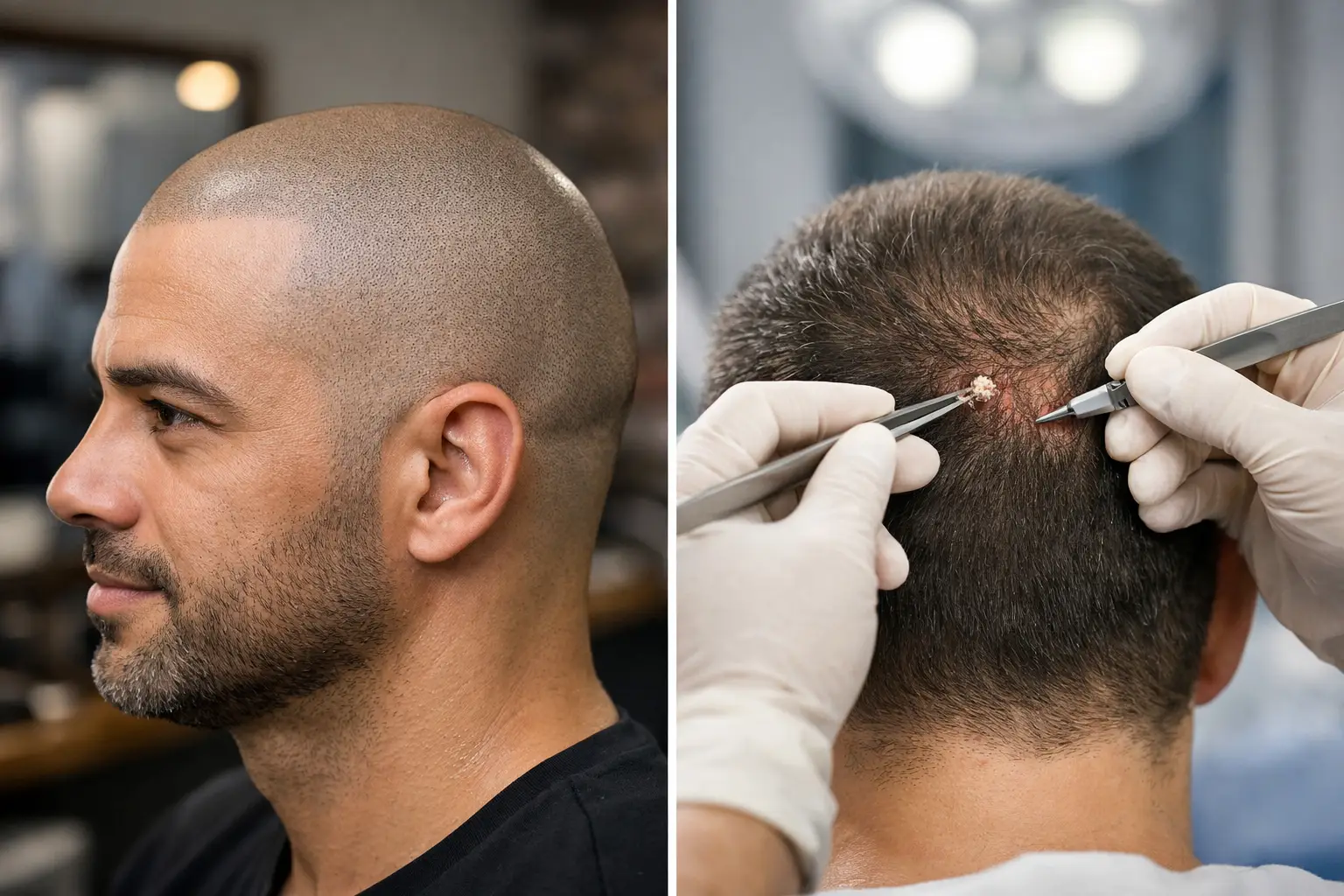
A widening part, a receding hairline, or a visible crown can change the way you feel when you catch your reflection in Florida sunshine. When comparing scalp micropigmentation versus hair transplant, the right choice is not about which treatment is “better” in every case. It is about the result you want, the hair you have now, your lifestyle, your budget, and how much downtime you are comfortable with.
Both options can be meaningful confidence restorers. One creates the appearance of fuller density through expertly placed pigment. The other relocates growing hair follicles to areas with thinning or loss. They solve different parts of the same concern, and in some cases, they can even work beautifully together.
Scalp Micropigmentation Versus Hair Transplant: The Core Difference
Scalp micropigmentation, often called SMP, is a cosmetic tattooing technique that places tiny, layered pigment impressions into the scalp. The impressions are designed to resemble natural hair follicles. For clients with short hair, it can create the look of a closely shaved, fuller hairline. For clients with longer hair or diffuse thinning, it can reduce the contrast between the scalp and existing hair, making hair appear denser.
A hair transplant is a surgical procedure. A qualified surgeon harvests healthy follicles, usually from the back or sides of the scalp, and implants them into areas of thinning. Those follicles may grow hair over time, allowing for cutting, styling, and coloring once healing is complete.
The distinction matters: SMP creates an exceptionally realistic visual effect, but it does not grow hair. A transplant can grow hair, but it depends on donor supply, surgical candidacy, healing, and the long-term pattern of your hair loss.
When Scalp Micropigmentation May Be the Better Fit
SMP is often an appealing choice for men and women who want a polished, low-maintenance answer to visible scalp contrast. It is especially versatile for receding hairlines, thinning crowns, diffuse hair loss, alopecia, and hair transplant scars.
For many clients, the biggest advantage is speed. SMP is typically completed over multiple sessions, with time between appointments for the pigment to settle and the artist to build natural-looking density. There is no incision, no graft harvesting, and no need to wait months for transplanted hair to grow.
It can also be a practical choice if your donor area is limited. A transplant relies on having enough healthy follicles available for transfer. SMP does not. Instead, the artist works with your skin tone, natural hair color, hairline pattern, and existing density to create a customized result that looks intentional rather than stamped on.
That artistry is essential. A hairline that is too dark, too low, too sharp, or too uniform can look unnatural. A thoughtful SMP treatment uses soft placement, gradual density, and a design suited to your age, features, and personal style. At a luxury studio, the goal is not simply to add dots. It is to create a refined result that feels like you.
SMP also fits busy schedules well. Aftercare is still important, especially in the first days after a session. Clients need to follow guidance around sweating, swimming, sun exposure, and washing so the pigment heals evenly. But the downtime is generally far lighter than surgical recovery.
When a Hair Transplant May Be Worth Considering
A hair transplant can be a strong option for someone who wants actual hair growth in an area of loss and has sufficient donor hair. It may suit clients with stable hair loss, realistic expectations, and the willingness to commit to a surgical process and a longer timeline.
The results are not immediate. Transplanted follicles commonly shed before new growth begins, and visible improvement often takes several months. Full maturation can take a year or more. That can be worthwhile for the right candidate, but it requires patience.
A transplant also comes with medical considerations. You will need a consultation with a qualified hair restoration surgeon, who can assess your scalp health, donor density, medical history, medications, and likelihood of continued hair loss. Surgery carries risks such as scarring, infection, swelling, uneven growth, and graft survival concerns. Choosing an experienced medical provider matters.
Cost is another factor. Hair transplants can be a significant investment because pricing often reflects the number of grafts, technique, surgeon expertise, and geographic area. Some people also require more than one procedure over time as hair loss progresses.
Comparing Results, Maintenance, and Lifestyle
The visual result you want should guide the decision. If you love a cropped style or want the appearance of a crisp, fuller hairline without surgery, SMP can be remarkably convincing. It is also a beautiful option for women with thinning along the part or crown because it can make existing hair look more abundant without changing its texture or styling routine.
If you want to run your fingers through new growing hair, wear longer styles in previously bare areas, or have enough donor hair to support your goals, a transplant may be more aligned with your vision. Still, transplanted hair does not stop the rest of your natural hair from thinning. Ongoing hair-loss management may be recommended by your medical provider.
SMP requires maintenance, but not daily effort. Pigment can gradually soften over the years, particularly with consistent sun exposure, skin changes, and individual lifestyle factors. Periodic touch-ups help preserve the richness and realism of the result. Sunscreen and proper scalp care can make a difference in pigment longevity.
A transplant does not require pigment touch-ups, but it can involve medical follow-up and future planning if hair loss continues around the transplanted area. The transplanted follicles may be permanent, while the surrounding native hair may still be vulnerable to thinning.
Can You Combine SMP and a Hair Transplant?
Yes. Combining the two is often an elegant strategy for the right person. SMP can add the appearance of density between transplanted hairs, soften the look of a transplant scar, or create a fuller visual result when donor hair cannot cover every area as densely as desired.
Timing is important. If you are considering surgery, speak with your surgeon first about the appropriate order and healing schedule. SMP should never interfere with surgical planning, scalp recovery, or medical advice. Once the scalp is fully healed and cleared for treatment, pigment can be customized around the transplanted growth pattern.
Questions to Ask Before You Decide
Start with the result you want to see in the mirror. Do you want the appearance of density, a shaved-hair look, scar camouflage, or growing hair that can be styled longer? Then consider your timeline, tolerance for surgery, budget, and willingness to maintain the result over time.
Ask your SMP artist how they approach hairline design, color matching, session spacing, healing, and touch-ups. Ask a transplant surgeon about donor supply, expected graft count, projected density, recovery, possible future procedures, and whether your hair loss appears stable.
Photos are helpful, but your treatment should never be copied from someone else’s scalp. Skin tone, hair texture, facial structure, loss pattern, and age all affect what will look natural. A personalized consultation gives you room to ask direct questions and make a confident decision without pressure.
Whether you choose scalp micropigmentation, a hair transplant, or a thoughtful combination of both, the most beautiful result is one that fits your life and lets you spend less time worrying about your hair.