
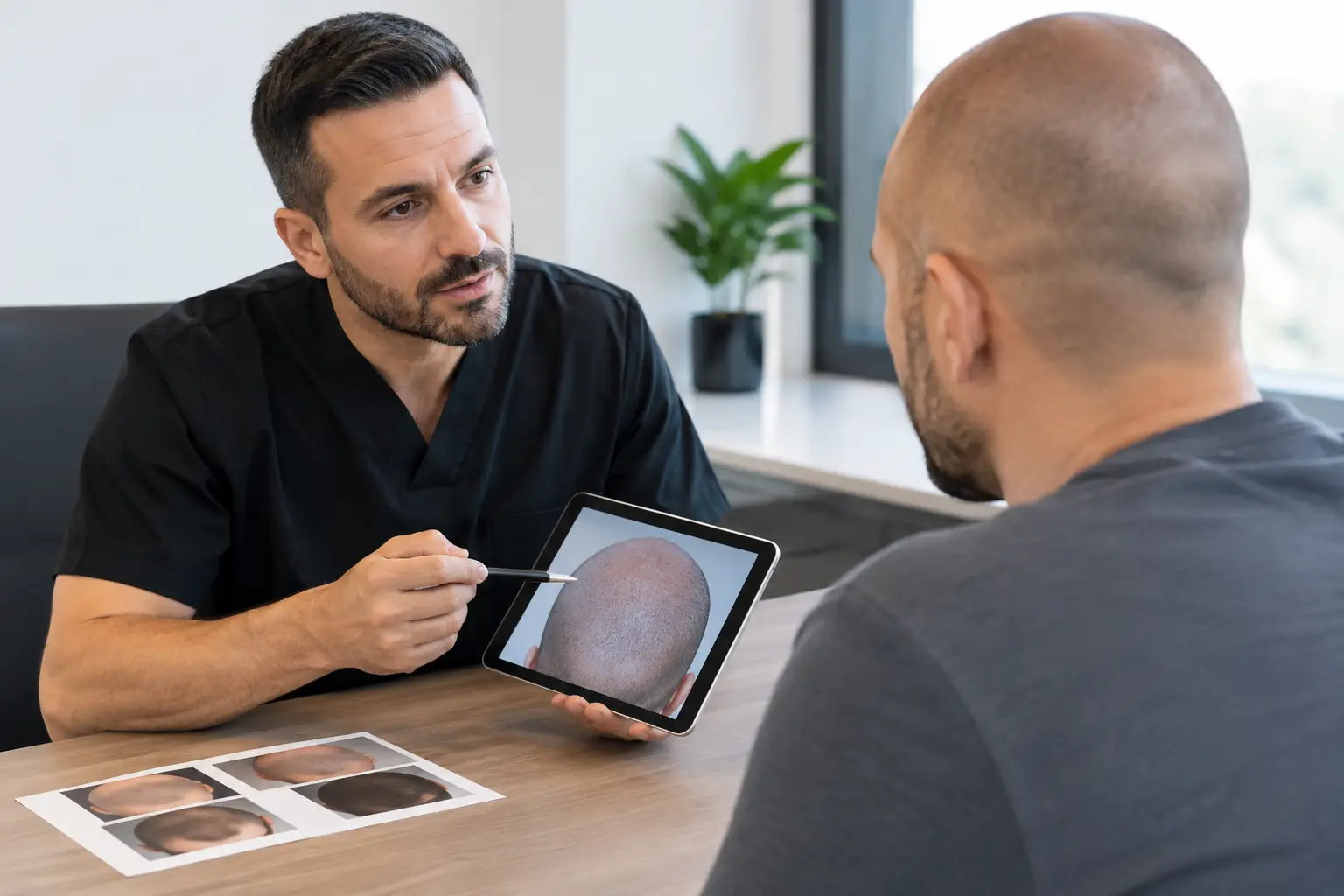
A scalp tattoo consultation is where a fuller-looking hairline starts to become a personalized plan. This scalp tattoo consultation guide will help you walk in prepared, understand what your artist is assessing, and leave with clear expectations about scalp micropigmentation, design, healing, and maintenance.
Scalp micropigmentation, often called a scalp tattoo, uses carefully placed pigment impressions to recreate the appearance of closely shaved hair follicles. It can add the look of density to thinning areas, soften the contrast of scars, or create the appearance of a strong, natural hairline. The result is not a replacement for hair growth. It is a confidence-focused cosmetic solution designed around your features, skin tone, existing hair pattern, and lifestyle.
What Happens at a Scalp Tattoo Consultation?
Your consultation should feel personal, never rushed. Before discussing pigment or placement, your artist should learn what you want to change and what you still want to preserve. Some clients want a slightly fuller appearance through a thinning crown. Others want to camouflage a hair transplant scar or create the look of a clean buzz cut after hair loss.
Expect a conversation about your hair-loss history, current routine, medical considerations, and long-term goals. Bring up anything that may affect your scalp or healing, including recent sun exposure, active irritation, skin conditions, medications, prior scalp procedures, or a history of pigment reactions. Transparency helps your artist recommend the safest, most flattering approach.
A quality consultation also includes a visual assessment. Your artist will look at your scalp tone, natural hair color, degree of hair loss, hairline pattern, and any scar tissue. This is how the treatment plan becomes customized rather than copied from a photo.
Your Artist Should Set Realistic Expectations
The most beautiful scalp micropigmentation looks believable, not overly dramatic. It is built in layers, usually over multiple sessions, so the pigment can be adjusted for depth and softness as it settles.
If you have longer hair and diffuse thinning, scalp micropigmentation can reduce the appearance of scalp show-through. If you are planning to keep your head closely shaved, it can create a polished, freshly groomed look. The best option depends on your current hair, future hair-loss pattern, and willingness to maintain a hairstyle that supports the result.
A consultation is also the right time to discuss what scalp micropigmentation cannot do. It does not create physical hair texture, stop hair loss, or make a completely bare scalp look like long, flowing hair. What it can do is create visual density and balance when the design is done with restraint and artistry.
Hairline Design Is the Most Personal Decision
A hairline should complement your face today and still feel right years from now. During your consultation, your artist may sketch or map a proposed hairline so you can see the overall shape before treatment begins.
A lower, sharper hairline can be tempting, especially when you are ready for a visible change. But natural-looking results often come from a more conservative design with subtle irregularity. Real hairlines are not perfectly straight. They have softness, variation, and an age-appropriate placement that keeps the finished look believable.
Talk openly about your preferences. Do you prefer a crisp barbershop-inspired edge, a softer mature hairline, or a design that follows the way your hair naturally grows? Photos can be helpful, but your artist should adapt the concept to your own proportions rather than duplicate someone else’s result.
For scar camouflage, the design conversation may focus less on a hairline and more on blending. Scar tissue can retain pigment differently than surrounding skin, so it may require a gradual approach and additional sessions. A skilled artist will explain that variability before moving forward.
Questions to Ask During Your Scalp Tattoo Consultation
You do not need to arrive with technical knowledge. You simply need enough information to make a confident decision. Ask how many sessions your specific goal may require, how far apart they will be scheduled, and what is included in the treatment plan.
Ask how the artist chooses pigment tone for your skin and existing hair. Pigment should be selected with both your current look and healed result in mind. The goal is a tone that blends naturally, not a flat black or blue-gray appearance that draws attention for the wrong reasons.
You can also ask to see healed results, especially on clients with a similar skin tone, hair color, hair-loss pattern, or scar type. Fresh photos can look bold immediately after a procedure, while healed work tells you more about how the pigment settles over time.
Other worthwhile questions include how the studio handles touch-ups, what aftercare is required, and what factors could affect pigment retention. If you spend a great deal of time outdoors, swim frequently, train intensely, or work in a humid environment, mention it. Florida sunshine and an active routine do not automatically rule out treatment, but they do make proper aftercare and sun protection especially relevant.
Candidacy, Skin Health, and Timing
The right time for scalp micropigmentation depends on the health of your scalp. Active sunburn, open areas, infection, severe dandruff, psoriasis flare-ups, or unexplained irritation should be addressed before a cosmetic tattoo appointment. Healthy, calm skin gives pigment the best opportunity to heal evenly.
If you recently had a hair transplant, your provider may recommend waiting until your scalp has fully recovered. The appropriate timeline can vary based on your procedure and healing progress, so follow guidance from your medical provider and disclose the timing during your consultation.
Hair loss can also continue after scalp micropigmentation. That does not mean treatment is a poor choice. It simply means your artist should create a design that can remain natural if your density changes. A thoughtful plan leaves room for future blending or adjustment rather than committing you to an overly aggressive hairline.
Understanding Sessions, Healing, and Maintenance
Scalp micropigmentation is typically completed in a series because natural density is created gradually. The first session establishes the foundation. Following sessions add depth, refine the hairline, and fill areas that need more visual density after healing.
Your artist will provide procedure-specific aftercare, and it should be followed exactly. In general, clients may need to avoid getting the area wet, intense sweating, swimming, direct sun, and picking or scratching while the scalp heals. Your skin needs time to settle without excess moisture, friction, heat, or exposure.
Mild tenderness, redness, or temporary darkness immediately after a session can be normal. The appearance softens as the scalp heals. If anything feels unusual or you have concerns during recovery, contact your artist promptly instead of guessing.
Long-term maintenance varies. Sun exposure, skin type, lifestyle, and pigment retention all influence how long the result stays fresh. Many clients eventually choose a touch-up to restore definition. Your consultation should include an honest discussion of likely maintenance rather than promising a permanent, unchanged result forever.
Choose Comfort, Sanitation, and Clear Communication
Luxury is not only about how beautiful the studio feels. It is also about feeling heard, informed, and cared for from your first conversation through your follow-up appointments. Look for an artist who explains the process clearly, uses proper sanitation practices, welcomes your questions, and does not pressure you into a design that feels too bold.
At The Permanent Makeup Studio, a complimentary consultation gives Clearwater and Tampa Bay clients space to discuss their goals before committing to treatment. That conversation should leave you feeling excited, but also grounded in what your result can realistically achieve.
Bring your questions, be honest about your lifestyle, and give yourself permission to choose a design that feels like you. The right scalp tattoo plan does not ask you to become someone else. It helps you see yourself with more confidence every time you look in the mirror.